Harnik Paleo Lab
  • Home
  • People
  • Research
  • Courses
  • Publications
  • Photos
    • Scanning electron microscopy
    • 2025 GOME Fieldwork
    • 2024 GoMX Fieldwork
    • 2023 GoMX Fieldwork
    • 2022 GoMX Fieldwork
    • 2019 GoMX Fieldwork
    • 2018 GoMX Fieldwork
    • 2017 Louisiana Fieldwork
    • 2016 LA & AL Fieldwork
    • 2015 GoMX Fieldwork
    • GoMX Pinhole Photography
    • Conservation Paleobiology Fieldtrip
    • History of the Earth movie projects
    • Paleogene of the Gulf Coastal Plain
  • News
  • Lab Blog
  • Get Involved
  • Home
  • People
  • Research
  • Courses
  • Publications
  • Photos
    • Scanning electron microscopy
    • 2025 GOME Fieldwork
    • 2024 GoMX Fieldwork
    • 2023 GoMX Fieldwork
    • 2022 GoMX Fieldwork
    • 2019 GoMX Fieldwork
    • 2018 GoMX Fieldwork
    • 2017 Louisiana Fieldwork
    • 2016 LA & AL Fieldwork
    • 2015 GoMX Fieldwork
    • GoMX Pinhole Photography
    • Conservation Paleobiology Fieldtrip
    • History of the Earth movie projects
    • Paleogene of the Gulf Coastal Plain
  • News
  • Lab Blog
  • Get Involved

Expectations Versus Experience

6/16/2023

 
Post by Marie York (Colgate '26)

I had few expectations going into this research experience. Frankly, I was just thrilled to conduct field research on a boat, immerse myself in the deep South for the first time, revive my programming skills, and investigate the bivalves 20 meters below our vessel. The few expectations I did have, varied a bit from my actual experiences.
Picture
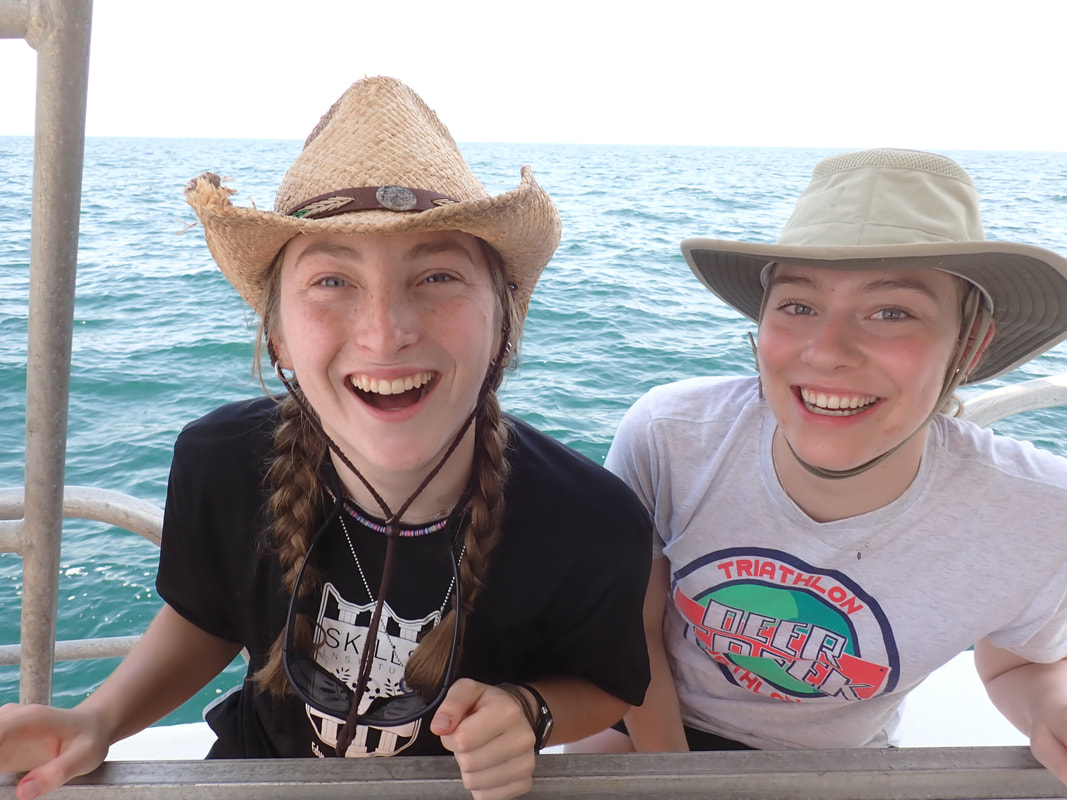
Mary Thomas and I on the EO Wilson on one of our final days offshore
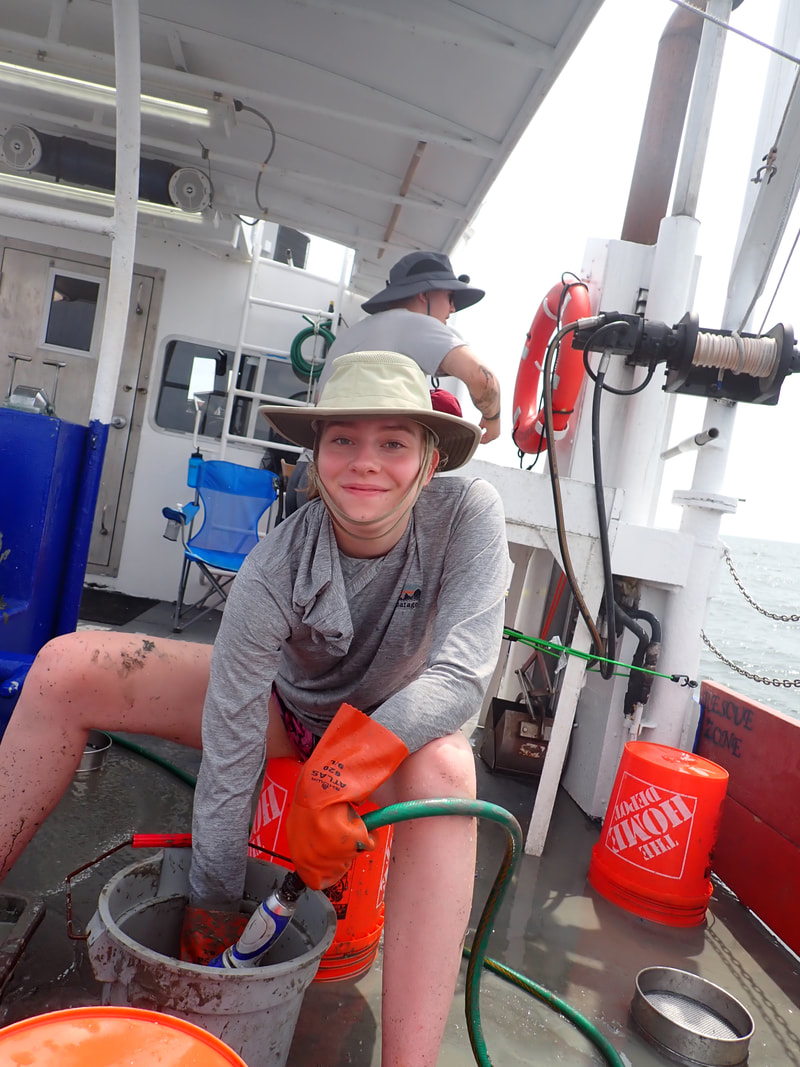
For starters, I had heard that it was incredibly hot in Louisiana and Alabama in the summer. However, the breeze from the moving boat and the wind made it cooler than I expected. Most days on the boat, I wore a long sleeve shirt and shorts. As for seasickness, it was a bit worse than I had expected. Before this experience, I had been on short ferry rides and small jet boats without any discomfort. Yet, on our first day on the research boat I threw up, in part because I had decided against taking seasickness medication. After that I took my sea sickness medicine for the rest of our time in Louisiana. For a few days in Alabama, I decided to skip the sea sickness medicine and was completely fine. I suspect once in Alabama my body had adjusted to the demands of being on a boat daily to do this work. Lastly, I expected to come back onshore each night sunburned and peeling. Thankfully, this was not the case. Although the UV reached 11 in Alabama, my frequent application of sunscreen, the shaded areas on the boat, and my wide-brimmed hats allowed me to protect my skin. In retrospect, I could have gone without the long sleeve shirts with UV protection, but it was reassuring to know they were an option. The picking areas on both the Acadiana and the EO Wilson were partly shaded and I often retreated to these areas when I perceived I was burning.
Picture
Sieving on the Acadiana with a long sleeve shirt and a wide-brimmed hat
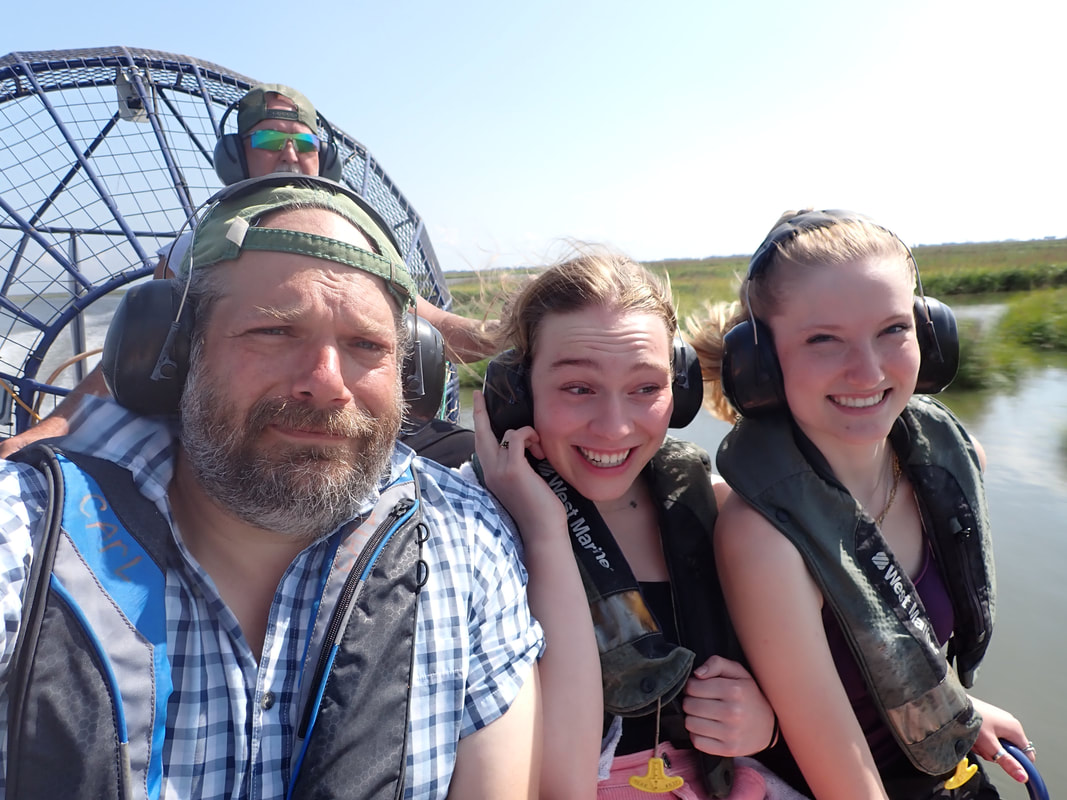
Even though I felt prepared for the boat, there was a major aspect of the research trip that I had not anticipated. I learned a lot from the stories that my peers and the crew told. Once we had arrived at LUMCON in Louisiana, the owner of a tiny convenient store explained how Hurricane Ida had affected jobs within their community. On the Acadiana, the captain, Carl, provided us with some local history about Chauvin, shared a massive number of photos depicting alligators he had caught, and took us on an airboat tour of the surrounding wetlands. In Houma, at a cafe, our lab exchanged stories of close encounters with dangerous animals.
Picture
Carl, Paul, Riley and I during the airboat tour
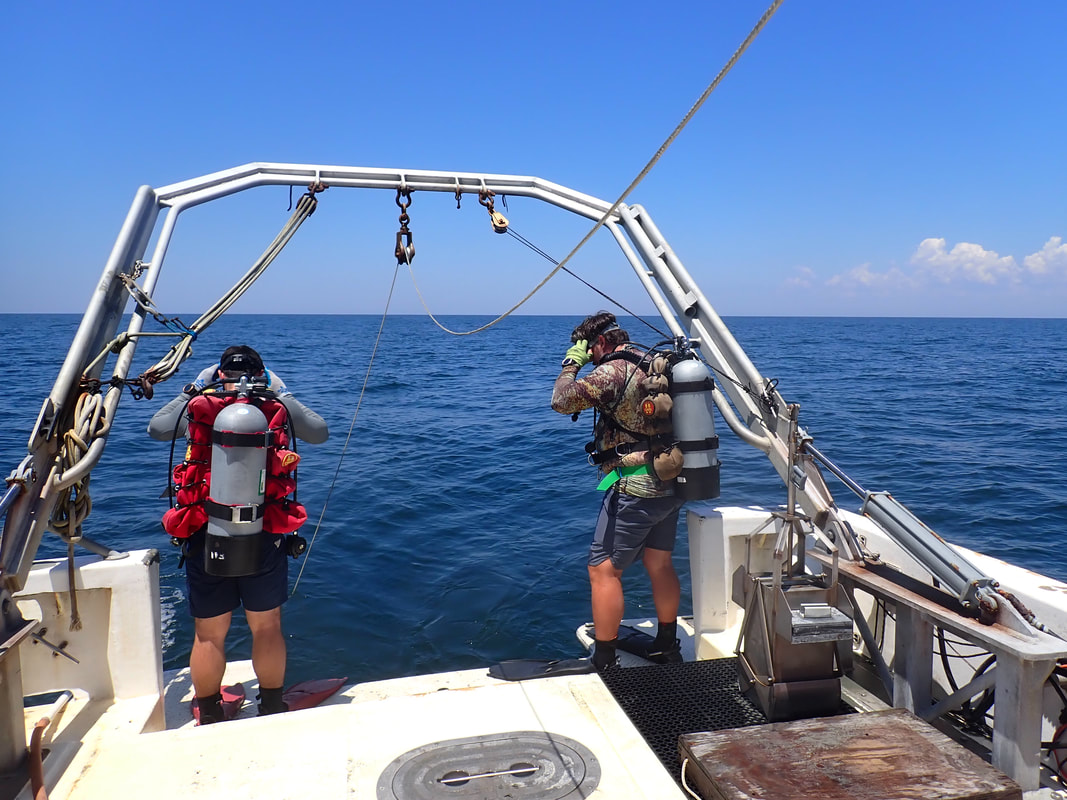
Likewise in Alabama, on the EO Wilson, Grant from the Dauphin Island Sea Lab explained the different scuba certification licenses, such as scientific, commercial, and leisure, as well as the process that he went through to obtain his license. Moreover, Grant used little anecdotes to describe how to tie different knots commonly used on boats. Cory, a diver in training at the Sea Lab, explained his upbringing, his decision to change his career and pursue marine sciences, and his knowledge of photography. At a dinner party hosted by Grant, Kelly, another scientist at the lab, used stories to describe the usefulness of art in paleontology and to provide advice about graduate school. ​
Picture
Grant and Cory preparing to scuba dive to collect core sediment samples
Picture
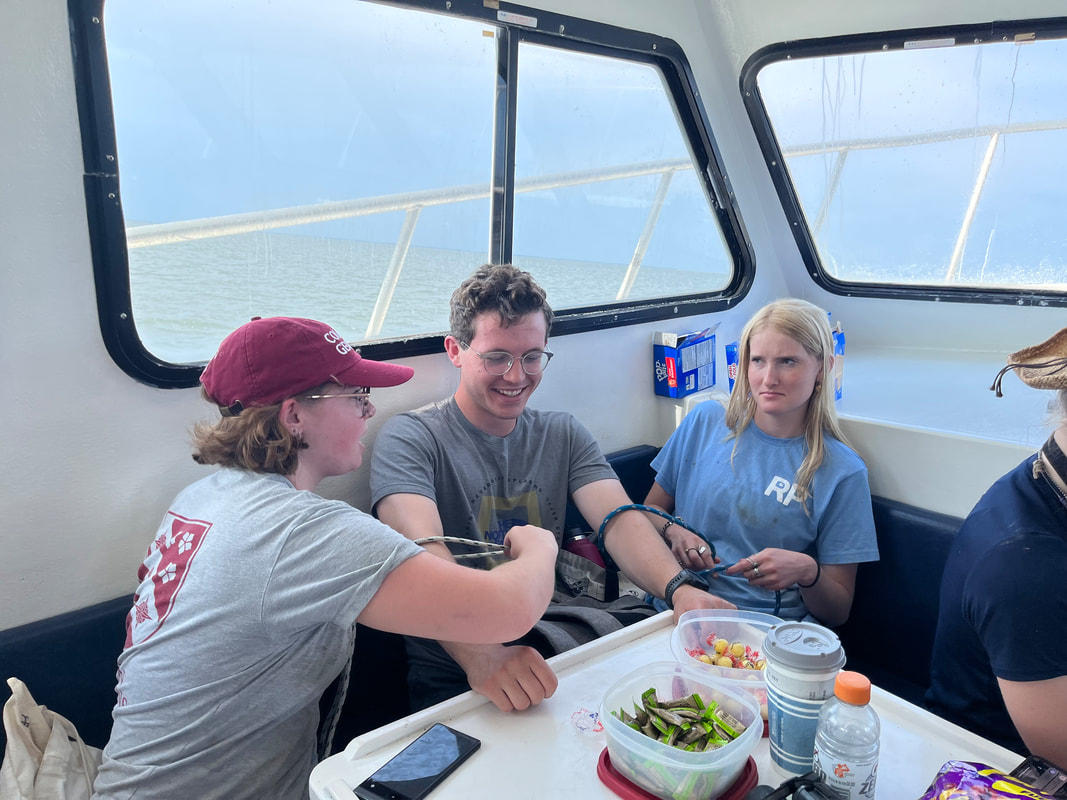
Learning how to tie boat knots
Physical demand of the research experience such as heat, seasickness, and sun exposure differed slightly from my expectations. In addition, the information I retained from stories by my peers and the crews we worked with were not anticipated, but very much appreciated.

Comments are closed.
Proudly powered by Weebly